We were driving on our way to Costco when I heard a scream from the back
seat. The conversation went something like this...
Mom: What was that?
Brother: She (sister) is trying to drink her old milk.
Sister: He (brother) won't let go of my drink.
Mom: Give your sister her milk.
Faint struggling could be heard for a couple seconds.
Brother: It spilled.
Mom: How full was it?
Sister, almost crying: It dumped all over my clothes.
Brother: (In a it-wasn't-my-fault tone) Just a little bit.
Mom: Where is the milk?
Children: What milk?
Mom: The milk that spilled!
Brother: I don't know.
Sister: Do you mean the chocolate milk?
So please have a little mercy on us. There are days when logic never enters the conversation until Dad gets home.
"Your body is the first thing any child of man ever wanted. Therefore dispose yourself to be loved, to be wanted, to be available. Be there for them with a vengeance. Be a gracious, bending woman. Incline your ear, your heart, your hands to them.... To be a Mother is to be the sacrament - the effective symbol - of place. Mothers do not make homes, they are our home." from Bed and Board, Robert Farrar Capon
Monday, March 19, 2012
Saturday, March 17, 2012
The Lost Virtue of Steadfastness
I read this article in the latest Touchstone magazine and I found it comforting, especially in terms of motherhood.
God's Place and Ours: On Mutability and the Lost Virtue of Steadfastness
by Anthony Esolen
Here are a few excerpts:
"Something of [the] longing for what is not here, this joy of the pilgrimage, has set deep roots in the soul of Western man. But it has become detached from an end to the pilgrimage.
We thus lose a sense of home, both the eternal and the temporal....
We are under compulsion of perpetual mobility precisely because, without God, to settle means to acknowledge defeat, and to rest means to die within. The metaphysical condition of such a life is divorce. We change towns, we change schools, we change houses, we change husbands and wives, we change churches, we change faiths. We go off into the distance, as we set at a distance those nearby things we still pretend to cherish, as, for instance, our children. We look down upon women who "stay at home," thinking of them rather as creatures who are stuck in mud. We almost treat as pious heroes those who are determined to leave their homes and never return, yet who still claim some tenuous and sentimental attachment to what they have abandoned. We invert the wisdom of St. Paul. We discard all things as if we discarded them not."
"We are not angels, we are not disembodied wills. Jesus never instructs us to love "humanity."
He instructs us to love the all-too-physical neighbor."
"The metaphysical condition of the faithful Christian is not divorce, but marriage, not mobility and mutability but steadfastness. 'Can a woman forget her suckling child, that she should not have compassion on the son of her womb?' asks the Lord. 'Yea, they may forget, yet will I not forget thee' (Is. 49:15).
Consider the image. The child longs for the mother, for her breast; he feeds from her very substance. It is that intimacy of place and person that expresses, in more than a metaphor, the steadfast love of God for his people. For the Lord 'hateth putting away,' says the prophet (Mal. 2:16). On what grounds may a man divorce his wife? Jesus dismisses the motive behind divorce entirely. A man moves from his father and mother so that he may 'cleave to his wife: and they twain shall be one flesh' (Matt. 19:5). The young man who has squandered his inheritance in that ever-seductive 'far country,' when he comes to his senses, did not say, 'I must leave this pigsty and follow my fortune elsewhere.' He said, 'I will arise and go to my father' (Luke 15:18). The Lord is the Good Shepherd who seeks the one sheep gone astray. 'Jerusalem, my happy home,' sings the poet, 'when shall I come to thee?'"
"There is a difference between being in a location, and dwelling; between remaining, with its sense of being left behind by the more adventurous, and abiding, with its sense of devotion and full-hearted peace. 'How amiable are thy tabernacles, O Lord of hosts!'"
"It is doubtful whether, without steadfastness, without devotion to this place, this work, this spouse, this land, we can enjoy even a decent human life. A tumbleweed is not only rootless. It is directionless. It is blown about by the chance of the wind, quitting here, divorcing there, forgetting here, abandoning there. In following our own purposes, regardless of the claims of steadfastness upon us, we lose our purpose, and turn with every turn of the fickle heart."
"We are not all monks. But we are parents, and children, and neighbors, and citizens. God has given us one another, and our homes, as worthy objects of our steadfast love, and as the grounds for preparing ourselves for the eternal home, the city of everlasting foundations. That Jerusalem is illuminated neither by the turning sun or moon, not by the electric static of the news, such as it always is, but by the eternal glory of God, and the Lamb."
Labels:
children,
contentment,
marriage,
motherhood,
neighbor,
quotes,
theology,
vocation,
worldliness
Monday, February 27, 2012
More on Marriage ~ Luther
One of my sisters forwarded this to me and it really encouraged me. It's nothing new (in fact Luther wrote it almost 450 years ago) but in the midst of the day to day tasks of motherhood it is so easy to forget...
" Our natural reason looks at marriage and turns up its nose and says, "Alas! Must I rock the baby? Wash its diapers? Make its bed? Smell its stench? Stay at nights with it? Take care of it when it cries? Heal its rashes and sores? And on top of that care for my spouse, provide labor at my trade, take care of this and take care of that? Do this and do that? And endure this and endure that? Why should I make such a prisoner of myself?"
What then does Christian faith say to this? It opens its eyes, looks upon all these insignificant, distasteful and despised duties in the spirit, and is aware that they are all adorned with divine approval as with the costliest gold and jewels.
It says, "O God, I confess I am not worthy to rock that little babe or wash its diapers, or to be entrusted with the care of a child and its mother. How is it that I without any merit have come to this distinction of being certain that I am serving thy creature and thy most precious will? Oh, how gladly will I do so. Though the duty should be even more insignificant and despised, neither frost nor heat, neither drudgery nor labor will distress me for I am certain that it is thus pleasing in thy sight."
Monday, February 20, 2012
From the Hearth: Recipes
So here we go with some more recipes, if you're interested.
Share 'em. Just share 'em.
Saturday, February 18, 2012
Baby Dear
Our Pastors encourage us mothers to take time to sit and hold our babies,
and gaze into their faces. Take the time to just look at them.
There is nothing more important we should be doing.
Thank you, Pastors.
Thank you, Pastors.
"We smile at our babies and talk to them.
Mommy says this is the way our babies know
they are the most wonderful babies in the world."
from one of my favorite children's books ~ "Baby Dear"
Illustrated by the gifted artist, Eloise Wilkins
Thursday, February 16, 2012
Crumbs
How low have I fallen?
The other night, when I had finally plopped down onto the couch at the end of a long day, my baby girl came crawling over and I noticed she had cookie crumbs all over her face. (One of her big brothers or sisters must have been being generous.) And of course no one was anywhere in sight to whom I could pass off the job of taking her to the kitchen and wiping down her hands and face.
I groaned. I could not muster the energy to get up. So what did I do?
I brushed all the crumbs off into my hand. And then guess what?
I ate them.
Hey, there comes a point (you're probably not there yet, and most likely never will be, you classy gal)
when exhaustion finally trumps squeamishness, etiquette, and even... self-respect.
So now you know.
Enjoying Your Children
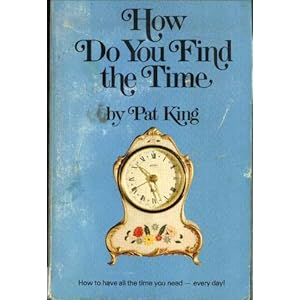
The following is an excerpt from the book "How Do You Find the Time?" by Pat King. She had ten children, and she tells how she learned (sometimes the hard way) that there is a war against us enjoying our children. I think I first read the book in 1976, the year I had my first baby. Then I read it several more times through the years (probably whenever I felt completely buried in laundry, diapers, and messes). Looking back over the years, I can see how much this book helped shape my attitude about what is really important. Here's an excerpt:
"Children take time. If we have been called by God to be mothers, let's drop all the activities that are making it so painful for us to enjoy our children.
It takes half an hour to feed a toddler breakfast.
Half an hour to bathe and dress him.
Half an hour to clean up what he shouldn't have gotten into.
It takes half and hour to sit with a four-year-old, working a puzzle for the first time.
It takes half an hour to listen to a six-year-old's reading lesson.
It takes half an hour to coach a teenager in history.
It takes twenty minutes to share a cup of tea with a young daughter.
It takes uncountable hours to drive a carpool.
It takes fifteen minutes, six times a day, to discipline a child who has decided to test you.
It takes fifteen minutes, each night, to listen to each child's prayers.
All these things that must be done with our children are at war with all that society tells us, or that we tell ourselves, we must do elsewhere.
For me the war ended abruptly, and with it the misery, with the realization that I didn't have to be any of those people that magazines so subtly insisted I should be. I didn't have to be a "great" housekeeper or an enviable cook. I didn't have to wear any of those "hats" ... I didn't have to be any of those people that the media insisted were so important: the politically involved, the champion of the down-trodden, or even the exciting, innovative hostess.Sometimes we make life so complicated, and get our time so parceled out, that half an hour for a child's story, or two hours for an afternoon game, or 15 minutes to clean up a quart of spilled milk throws our schedule and our dispositions into a fury."
Subscribe to:
Posts (Atom)